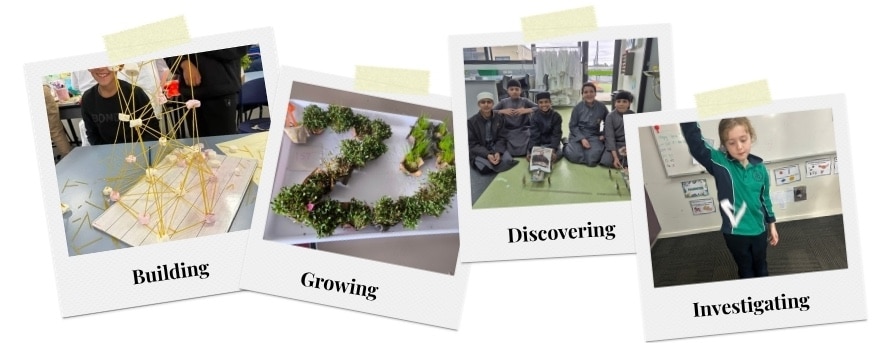
National Science Week is a wonderful opportunity to put science into action – giving students the chance to ask questions, investigate ideas, solve problems and discover how science connects with the world around them.
Across Victoria, schools celebrated with hands-on investigations, STEM challenges, experiments and creative projects that encouraged students to think, test, design and explore.
Here are some of the highlights from National Science Week 2026.
Exploring the science of wind
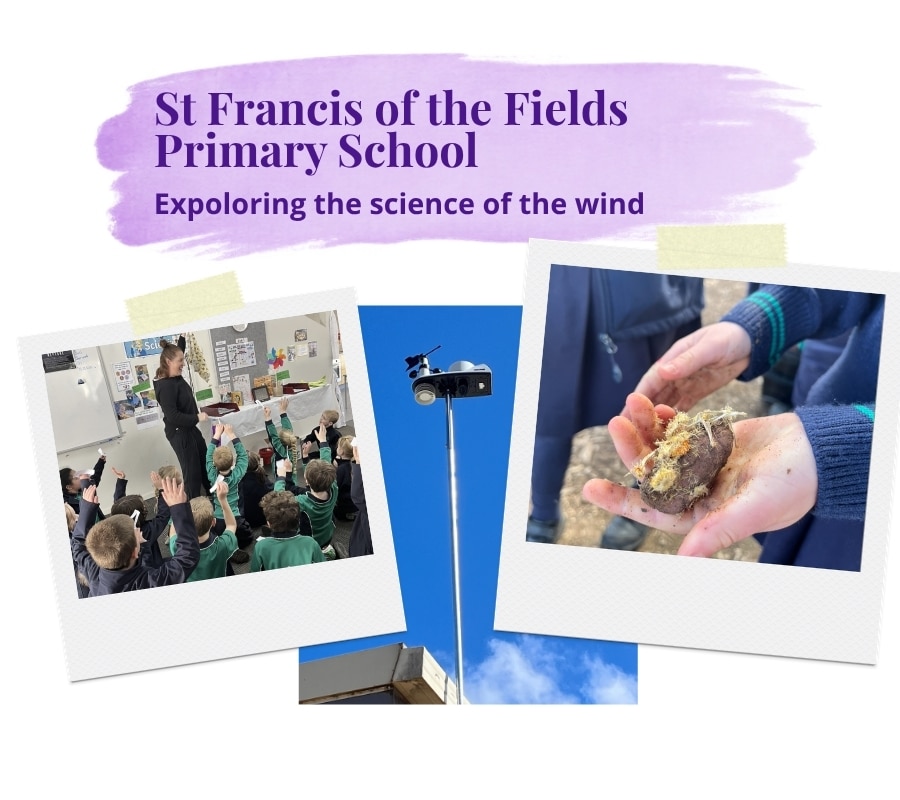
St Francis of the Fields Primary School Strathfieldsaye launched its National Science Week celebrations by switching on a brand-new weather station.
The station will give students a real-world opportunity to collect and investigate weather data from their own school environment, connecting classroom learning with what’s happening outside their door.
Students also explored wind and movement through paper helicopters and other hands-on activities, while the Grade 1 sustainability class created seed bombs for the school garden.
Their big question for the week was:
We can’t see the wind – but what does it do?
Students investigated this question through activities including kites, wind art, parachutes and wind-powered cars – designing, testing and discovering how an invisible force can shape the world around us.
A STEM day full of curiosity and creativity
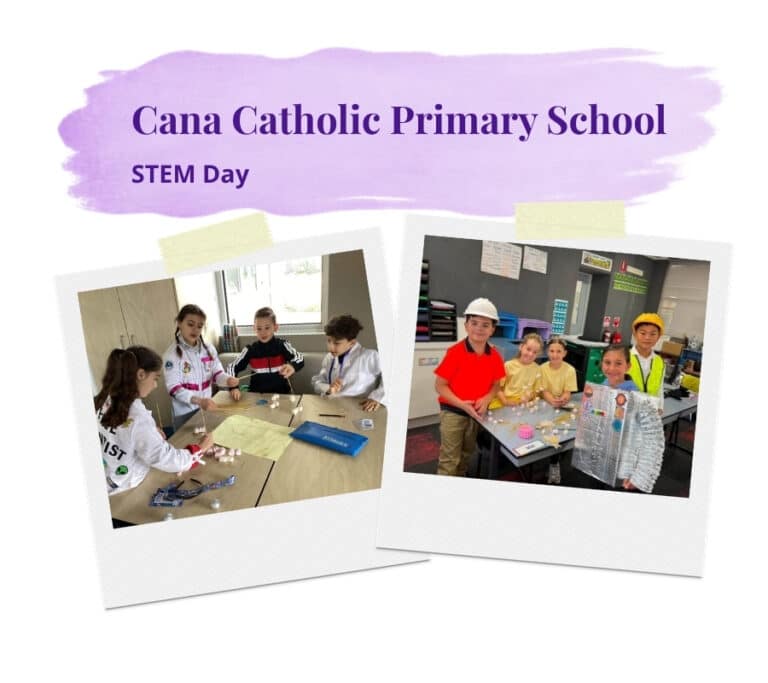
Students at Cana Catholic Primary School celebrated National Science Week with a STEM Day packed with hands-on learning and scientific discovery.
Students explored interactive experiments and exciting reactions, then put their engineering skills to work in the Marshmallow and Spaghetti Tower Challenge, designing, building and testing their structures.
The Paper Plane Challenge introduced students to aerodynamics as they experimented with different designs and folding techniques to see how far their planes could fly.
It was a day filled with experimentation, collaboration and plenty of opportunities for students to think creatively and solve problems.
Science takes off across the school
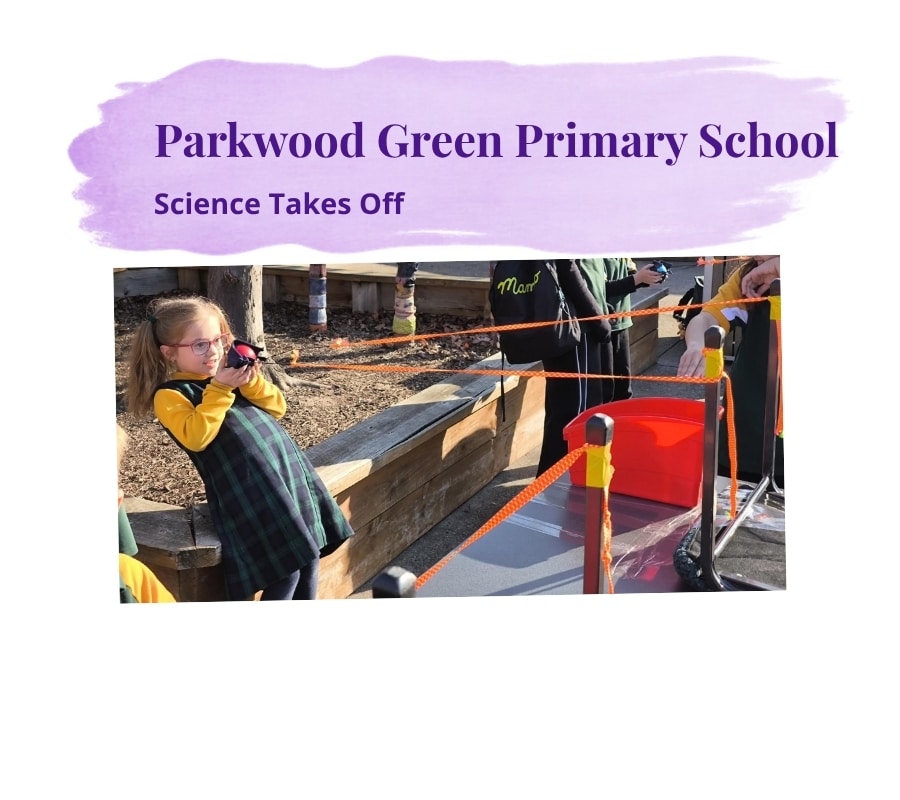
Parkwood Green Primary School launched National Science Week with plenty of energy – including giant catapults that sent the school community into the week with a bang.
Before- and after-school activities included vortex cannons, bubble challenges and a range of hands-on science experiences.
One of the highlights was seeing senior students take the lead. Grade 4–6 Science Leaders guided younger students through activities exploring magnetism, food chemistry, electricity, seed dispersal and microscopic nature.
It was a great example of students sharing their enthusiasm for science and helping to create a whole-school culture of curiosity and investigation.
Growing questions, collecting data
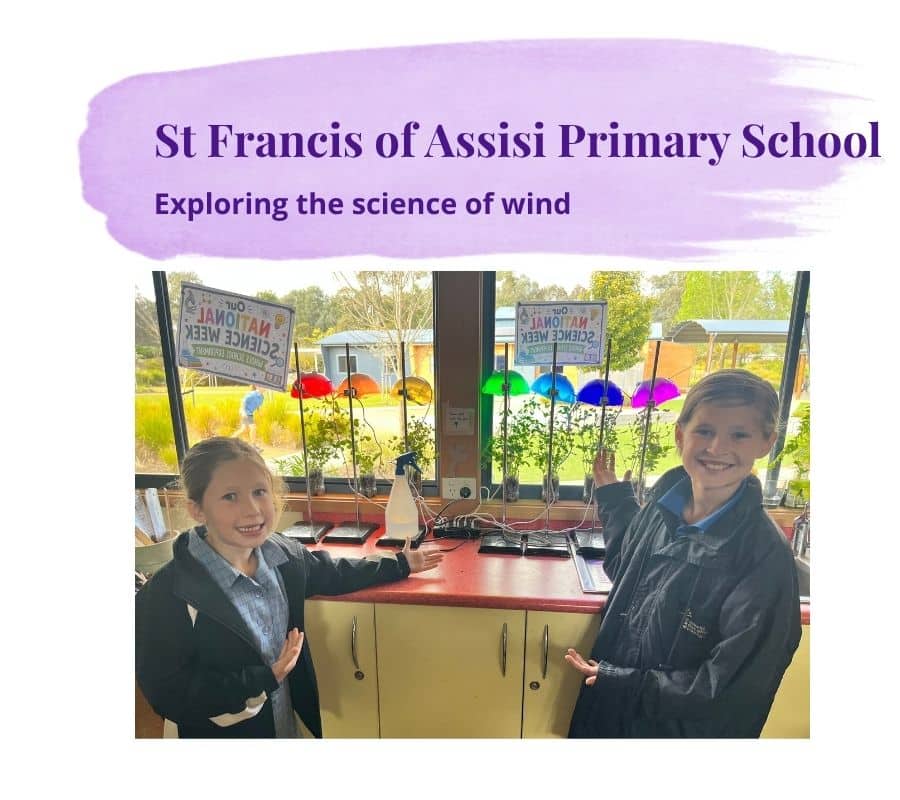
Students at St Francis of Assisi Primary School Wodonga investigated how different LED light colours affect the growth of snow pea seedlings.
By the end of the week, students had found that seedlings grown under red LED light had reached 15 cm – taller than those grown under the other colours tested.
But the investigation didn’t stop there.
Students continued to measure, graph and analyse their results as the snow peas grew, turning a simple growing experiment into an ongoing scientific investigation.
And when the experiment is complete, the seedlings will have a very practical destination – the school goats!
Where coding meets scientific inquiry
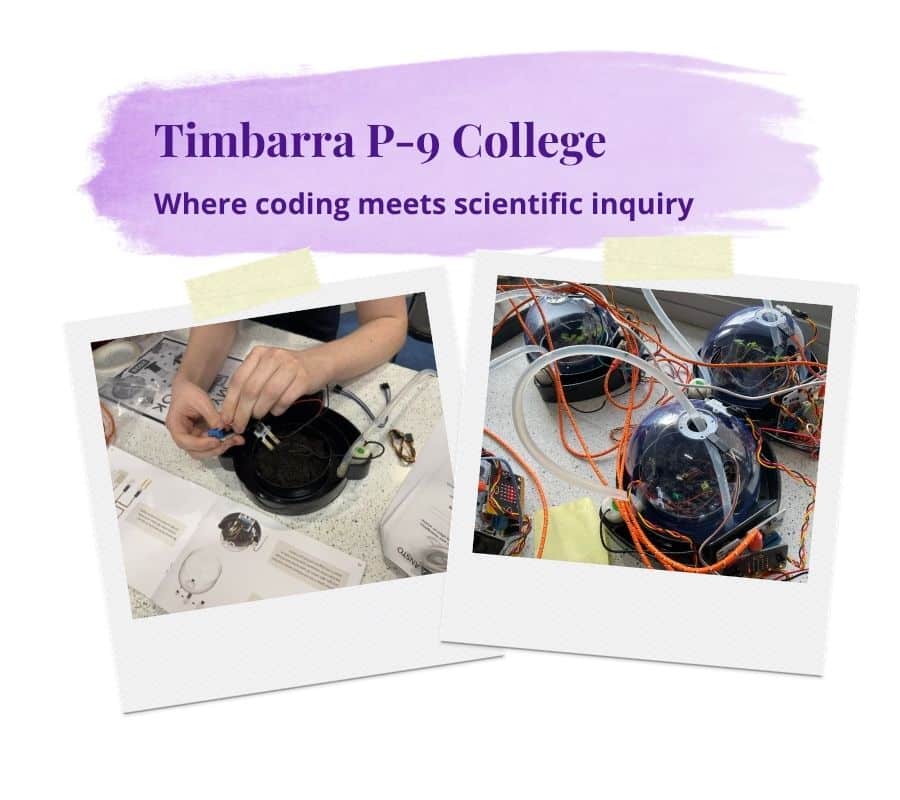
Students at Timbarra P–9 College – Berwick put science, technology and curiosity into action through a STEM greenhouse project supported by an Australian Science Teachers Association National Science Week grant.
Working through their STEM Academy, students developed their own inquiry questions, including:
- How long does it take for lettuce and cauliflower to sprout under optimal conditions?
- How does the amount of water affect the growth of sunflowers?
Using micro:bits, students programmed systems to control water and soil conditions while designing and running their own experiments.
They worked through the scientific investigation process – developing hypotheses, identifying variables, collecting results, discussing their findings and drawing conclusions.
The project also gave students an opportunity to consider experimental error and ways they could improve the reliability of their investigations.
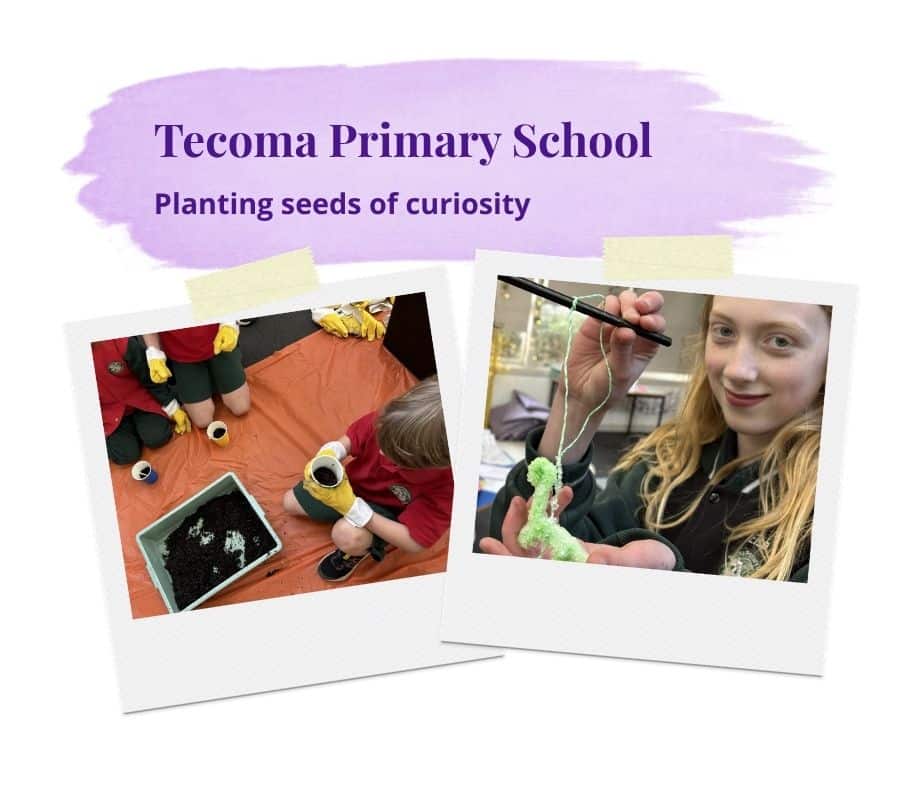
Planting seeds of curiosity
At Tecoma Primary School, National Science Week gave students across every year level opportunities to explore, wonder and investigate.
Foundation students investigated what seeds need to grow, while Years 1–2 explored seed dispersal by making paper helicopters and investigating how their designs moved through the air.
Years 3–4 explored how oysters make pearls, creating their own models of the process, while Years 5–6 investigated crystal growth using Borax solution and pipe cleaners.
Across the school, students also added their own scientific questions to a Curiosity Tree, creating a collection of questions that showed just how naturally young scientists wonder about the world around them.
The week culminated in a Seeds of Curiosity Science Show, bringing the whole school together for spectacular hands-on science.
Science across every year level
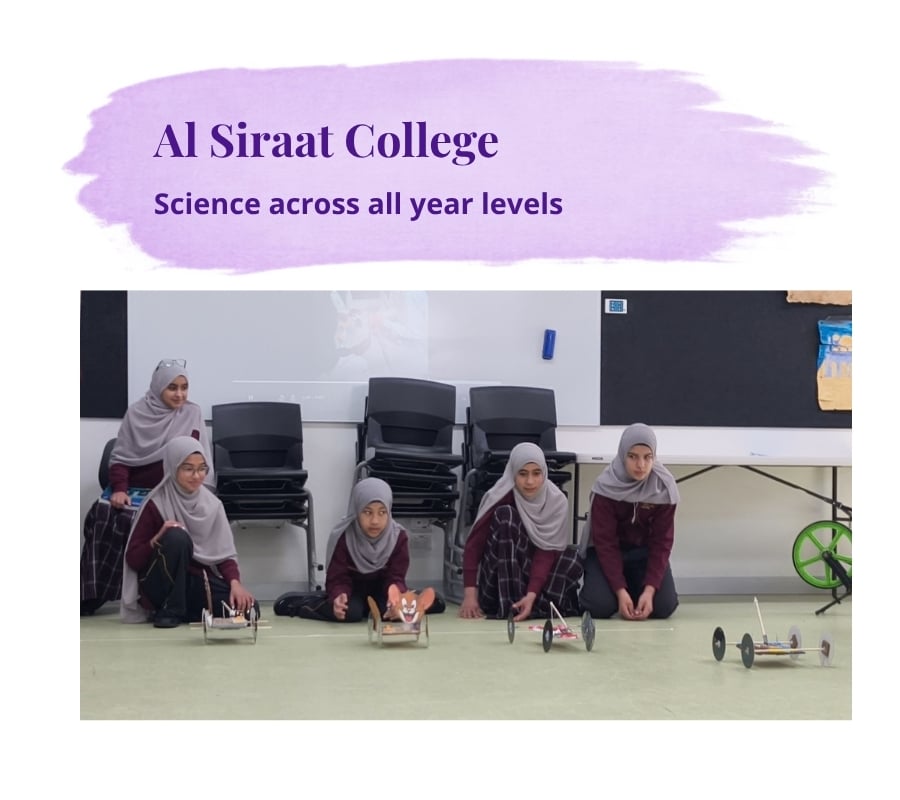
At Al Siraat College – Epping, National Science Week brought students from Years 7–12 together through a diverse program of science activities.
Year 7 students designed, tested and raced mousetrap cars, while Year 8 students brought scientists, cells and scientific concepts to life through a dress-up science parade.
Year 9 students tackled a science scavenger hunt, Year 10 explored DNA through sustainable model-making, and Year 11 students worked together to solve a scientific escape room.
For Year 12, the week provided an opportunity to celebrate their completion of the science course and reflect on their learning.
Across the program, students were encouraged to use scientific knowledge, creativity, teamwork and problem-solving skills in different ways
Designing seeds for a journey
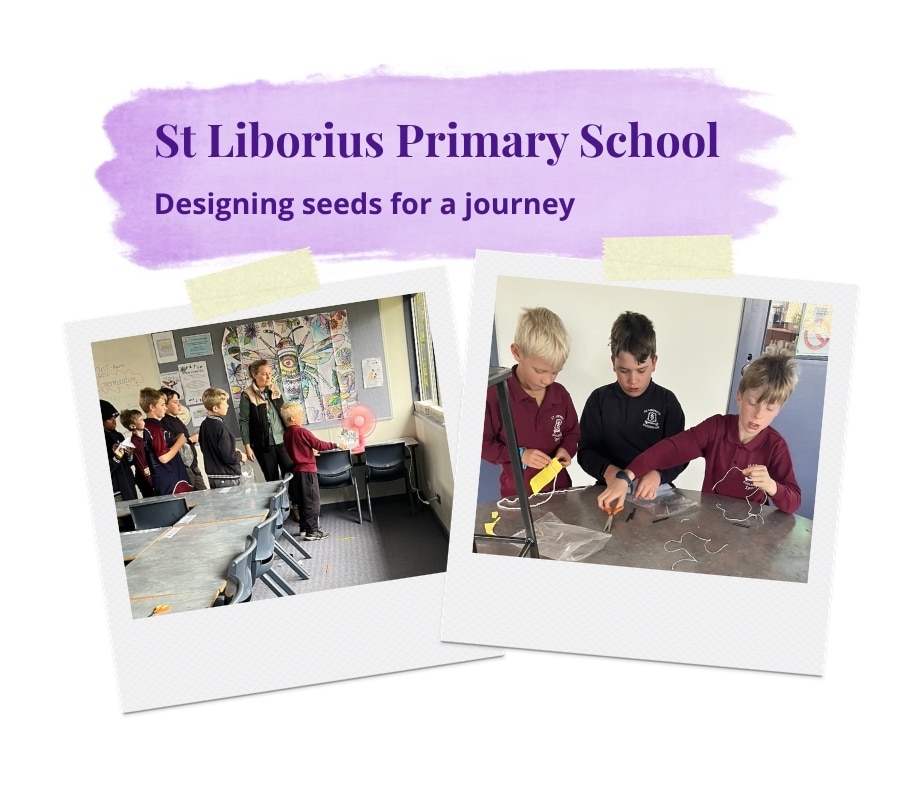
Students at St Liborius Primary School (Eaglehawk) STEM Club explored the science of seed dispersal through the Australian Science Teachers Association’s Seed Dispersal Design Challenge.
Students first investigated how real seeds travel through their environments, then entered a design–build–test–redesign cycle of their own.
Using a range of materials, they designed models inspired by the ways seeds use wind, water and other mechanisms to move away from their parent plant. The final test saw their designs released into the air using a fan to simulate wind.
It was a simple challenge with a powerful scientific process behind it – students made predictions, tested ideas, refined their designs and learned from the results.
Science that bounces, flies and reaches new heights
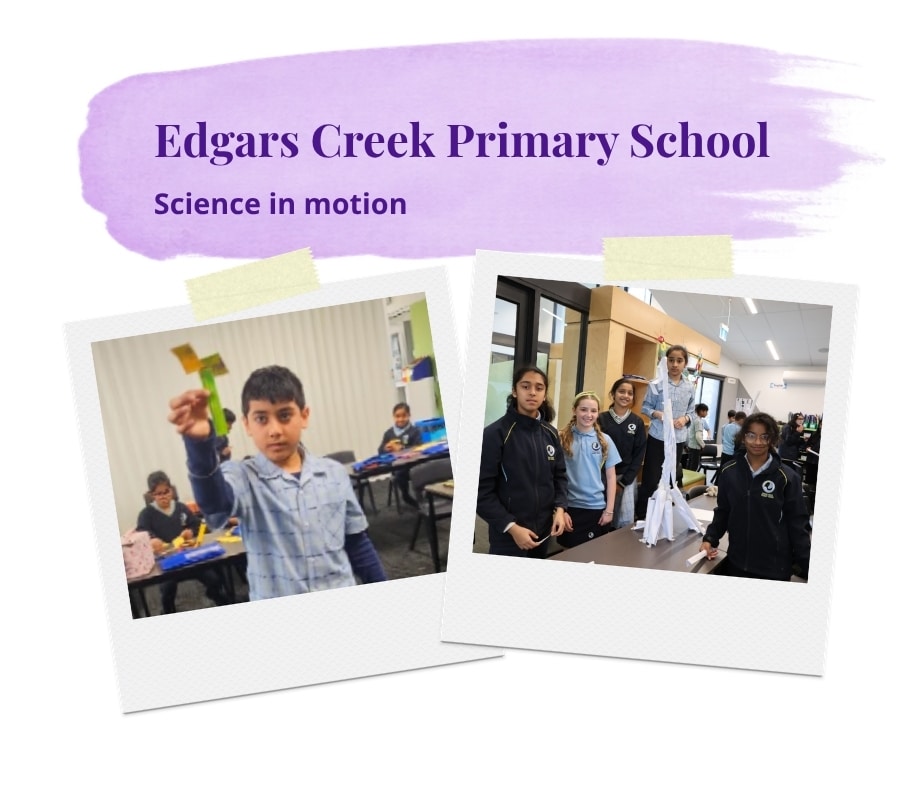
Students from Foundation to Year 6 at Edgars Creek Primary School immersed themselves in a week of hands-on science challenges.
Students transformed a previous slime-making activity into an investigation of bouncy balls, designed and built the tallest free-standing towers using paper and tape, and explored how wing length affects the falling speed of helicopter seed designs.
Balloon launchers introduced students to forces and motion, while science puzzles, colouring activities and a Sounds of Science quiz provided additional ways for students to engage with scientific ideas.
The activities gave students opportunities to test ideas, solve problems, adapt their designs and discover that sometimes the first idea isn’t the one that works best.